
Why Your Coffee Shop Needs a Brand Strategy
The coffee shop market is saturated. In most cities, customers can find a decent cup of coffee within a few blocks in any direction. So what makes someone walk past three competitors to get to yours?
It is not the coffee itself. Most specialty shops source quality beans. The difference is the brand: the feeling customers associate with your shop, the story they tell friends about it, and the reason they choose you over the chain down the street.
A brand strategy is the document that captures all of this. It defines who you are, who you serve, how you are different, and how you communicate. Without one, you are making branding decisions on the fly, and the result is usually inconsistent messaging that confuses customers.
Throughout this article, we will reference a brand strategy deck created for Beanhouse, a fictional artisanal coffee shop. Each section includes the actual strategy slide so you can see what a finished brand strategy looks like in practice.
Define Your Brand Purpose
Your brand purpose answers one question: Why does your coffee shop exist beyond making money?
This is not a mission statement filled with corporate jargon. It is a simple, honest reason for being. Maybe you opened your shop because your neighborhood lacked a real gathering place. Maybe you wanted to introduce people to single-origin coffee from small farms. Whatever it is, articulate it clearly.
A strong brand purpose gives your team direction and gives customers a reason to care. People do not form emotional connections with businesses that exist solely to sell products. They connect with businesses that stand for something.
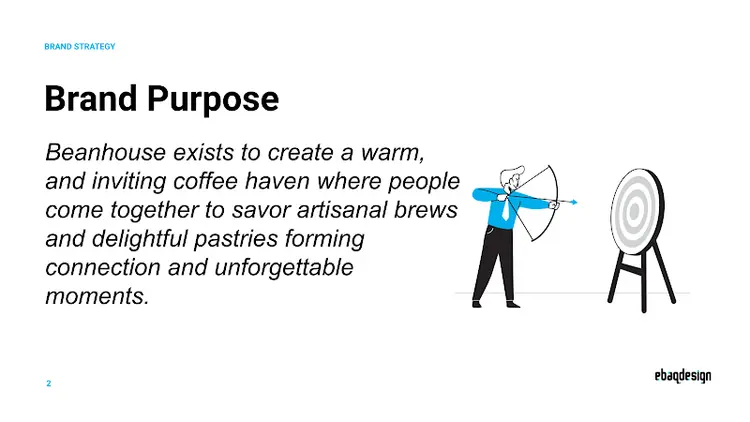
Notice how Beanhouse's purpose is not about selling coffee. It is about creating a space where people connect over quality brews. That distinction matters because it informs every decision, from interior design to event programming.
Set Your Brand Vision
If purpose is your "why," vision is your "where." It describes the future you are working toward. A brand vision should be ambitious but believable.
For a coffee shop, your vision might relate to expanding to multiple locations, becoming a training ground for baristas, or becoming the go-to specialty coffee destination in your region. The key is that it gives your brand a trajectory rather than just a present state.
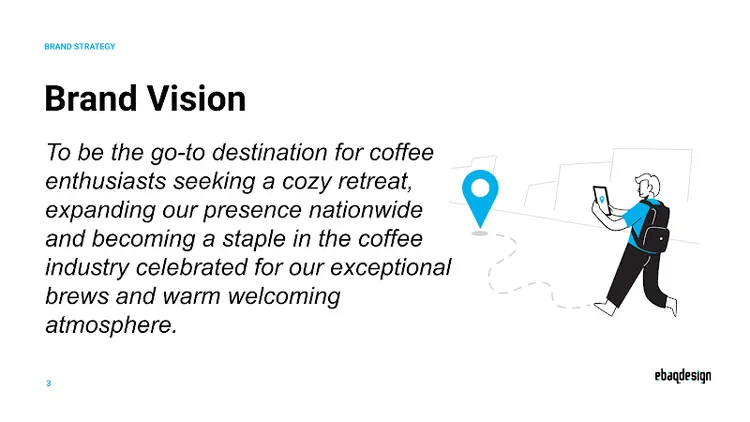
A well-defined vision keeps you from making short-term decisions that conflict with your long-term goals. If your vision is to be known for exceptional quality, discounting your coffee to compete on price works against that.
Establish Core Values
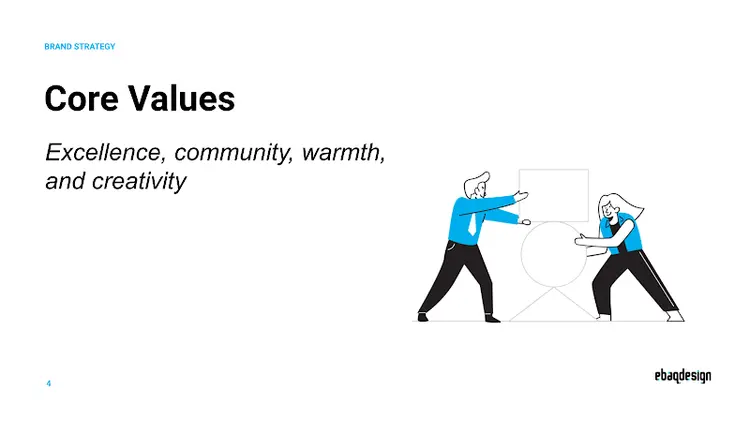
Core values are the principles that guide your decisions when the path is not obvious. They are not aspirational platitudes on a wall. They are filters you use to make real business choices.
When hiring, do you prioritize technical barista skill or warmth with customers? When choosing a supplier, do you optimize for cost or for sustainability? Your core values answer these questions before they come up.
Pick three to five values. More than that and they stop being useful as decision-making tools.
Identify Your Target Audience
You cannot be the perfect coffee shop for everyone. Trying to appeal to college students pulling all-nighters, remote workers needing a second office, and retirees looking for a quiet morning spot with equal intensity will stretch your brand thin.
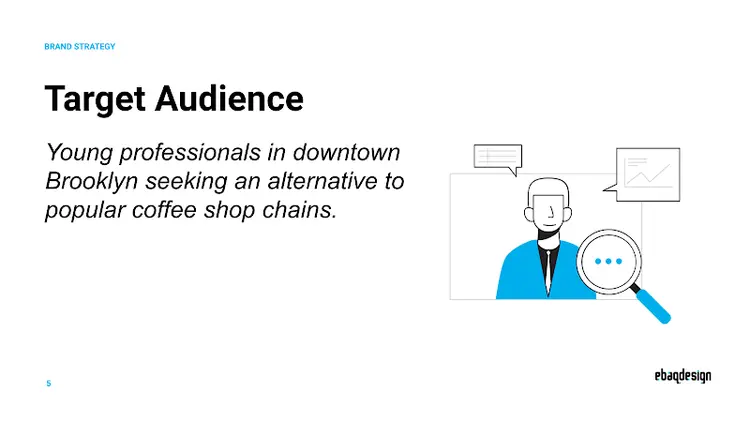
Pick a primary audience. This does not mean others are unwelcome; it means your branding decisions are optimized for a specific group. Your menu, pricing, music, furniture, hours, and social media content should all speak to this core audience.
A good target audience definition includes demographics (age, income, location) and psychographics (lifestyle, values, preferences). The psychographics matter more for coffee shops because your customer's mindset determines whether your vibe resonates.
Craft Your Brand Positioning
Positioning answers the question: What space does your coffee shop occupy in the customer's mind?
This is where you define how you are different. Are you the cozy neighborhood shop? The high-end specialty roaster? The fast, efficient coffee-on-the-go spot? The community hub with live music and local art?
Good positioning requires knowing your competition. Visit every coffee shop within a reasonable radius of yours. Understand what they do well and where they leave gaps. Your positioning should fill a gap that your target audience actually cares about.
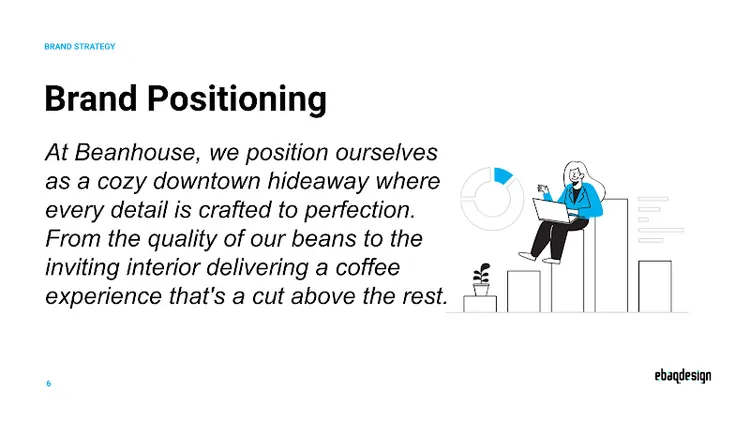
Notice that Beanhouse does not try to be everything. It leans into "cozy" and "crafted." That positioning statement guides decisions about interior design, cup selection, and how baristas interact with customers.
Set Marketing Goals
Your brand strategy needs measurable marketing goals that connect to your business objectives. Without them, you will spend money on marketing activities without knowing whether they are working.
For a coffee shop, common marketing goals include:
- Increase foot traffic by a specific percentage
- Build social media following in your target geography
- Attract customers from competitors through differentiated positioning
- Build community engagement through events, partnerships, and local presence
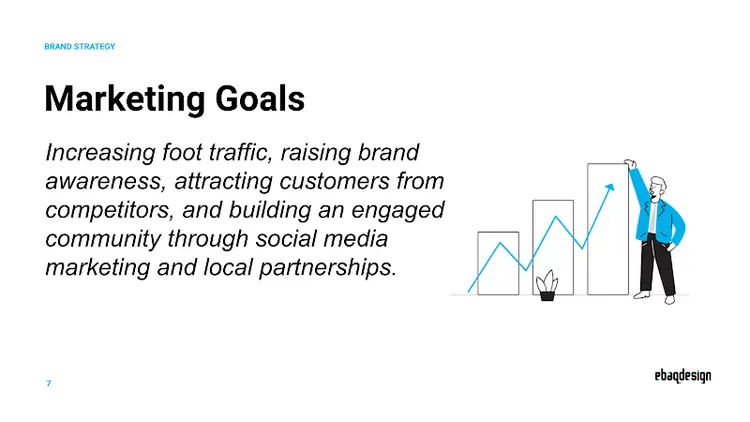
Define Brand Personality
If your coffee shop were a person, what would they be like? Brand personality makes your business relatable. It is the character trait that shows up in your Instagram captions, the way your baristas greet customers, and the typeface on your menu board.
Common personality frameworks use five dimensions: sincerity, excitement, competence, sophistication, and ruggedness. Most coffee shops lean toward sincerity and either excitement or sophistication, depending on the concept.
The key is specificity. "Friendly" is too generic. "A warm and welcoming perfectionist who meticulously crafts each cup" gives your team something concrete to embody.
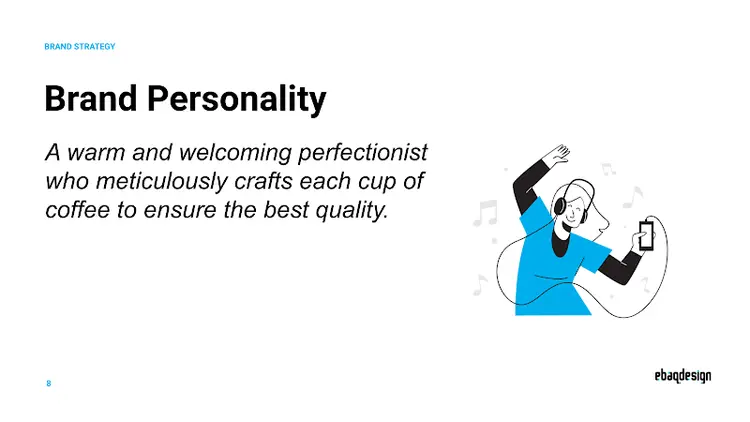
Develop Tone of Voice
Tone of voice is how your brand personality shows up in written and spoken communication. It is the difference between a chalkboard that says "Try our new seasonal blend" and one that says "Pumpkin spice can wait. Try something actually interesting."
Both are valid, but they signal very different brands. Your tone of voice guide should define where you fall on spectrums like:
- Formal vs. casual
- Serious vs. playful
- Technical vs. accessible
- Direct vs. warm
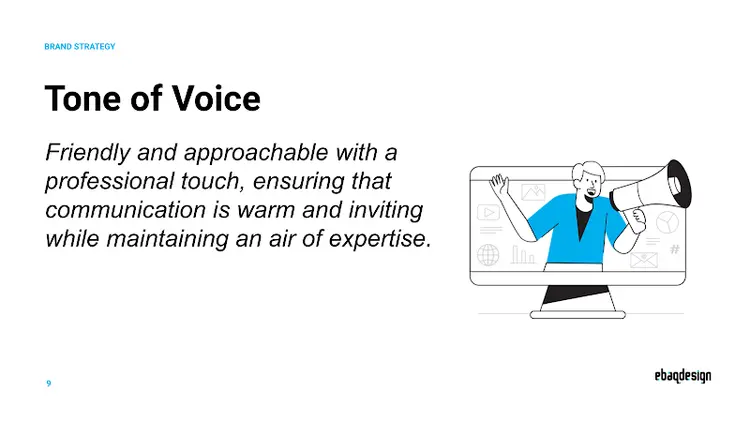
Document specific examples. Show your team what your brand sounds like in an Instagram post, a reply to a negative review, and a product description. Abstract guidelines only become useful when paired with concrete examples.
Create a Brand Tagline
A tagline is a short, memorable phrase that captures your brand's essence. It is not a slogan for a marketing campaign. It is a long-term identifier that should still work five years from now.
Good coffee shop taglines are short (ideally under six words), memorable, and connected to your brand positioning. They should evoke a feeling, not just describe what you sell.
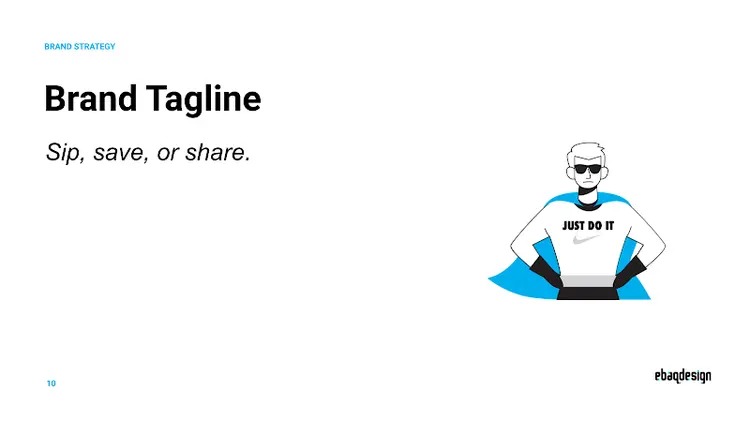
Once you have all these elements defined, you have a complete brand strategy deck that serves as the foundation for every branding decision going forward, from logo design and packaging to your social media presence and interior design choices.
Key Takeaways
- Start with purpose, not aesthetics. Your logo and color palette should come after your strategy, not before.
- Pick a specific target audience. You cannot build a strong brand by trying to please everyone.
- Positioning is about trade-offs. Choosing what you stand for means accepting what you do not.
- Brand personality should be specific enough that your team can embody it without asking questions.
- Document everything. A brand strategy only works if it is written down and shared with everyone involved.
- Use AI tools like Brand Strategist AI to build a complete strategy deck in minutes, not weeks.
Build Your Coffee Shop Brand Strategy
Brand Strategist AI walks you through every step and generates a professional strategy deck automatically. No branding experience needed.
Try Brand Strategist AI FreeFrequently Asked Questions
What should a coffee shop brand strategy include?
A coffee shop brand strategy should include your brand purpose, vision, core values, target audience definition, brand positioning, marketing goals, brand personality, tone of voice, and a tagline. Together, these elements form a cohesive foundation for all your branding and marketing decisions.
How much does it cost to brand a coffee shop?
Traditional branding agencies charge between $5,000 and $50,000+ for coffee shop brand strategy. AI-powered tools like Brand Strategist AI can help you develop a professional brand strategy for a fraction of that cost, making it accessible for independent shop owners and first-time entrepreneurs.
How do I differentiate my coffee shop brand from competitors?
Differentiation comes from your brand positioning. Focus on what makes your shop unique: your sourcing practices, atmosphere, community involvement, specialty drinks, or service style. Visit your local competitors, identify gaps in the market, and position your brand to fill a need your target audience actually has.
Can I use AI to create a brand strategy for my coffee shop?
Yes. AI brand strategy tools can guide you through defining your purpose, vision, target audience, positioning, and personality in minutes. The output gives you a professional strategy deck you can use to guide all branding decisions from logo design to marketing campaigns.
Should I hire a brand strategist or do it myself?
It depends on your budget and timeline. If you can invest $10,000+, a professional brand strategist brings deep expertise. For most independent coffee shops, starting with an AI-powered tool gives you 80% of the value at a fraction of the cost. You can always refine with a professional later as your business grows.