
Why Your Travel Agency Needs a Brand Strategy
The travel industry has changed dramatically. Customers can book flights, hotels, and entire vacations through platforms like Booking.com, Expedia, and Airbnb without ever speaking to a human. So why would anyone choose to work with a travel agency?
The answer is trust, expertise, and personalization. But if your brand does not communicate those qualities clearly, potential clients will never discover them. They will default to the cheapest option on an OTA instead.
A brand strategy is the document that defines who your travel agency is, who it serves, and why it is different from both online platforms and competing agencies. Without one, your marketing becomes a collection of random posts about destinations with no cohesive message tying them together.
Travel is an emotional purchase. People are spending significant money on experiences they have been planning for months or even years. They need to trust the company handling those plans. A clear, consistent brand builds that trust before the first phone call or email ever happens.
Throughout this article, we will reference a brand strategy deck created for Travel Pro, a travel agency specializing in personalized itineraries and adventure packages. Each section includes the actual strategy slide so you can see what a finished brand strategy looks like in practice.
Define Your Brand Purpose
Your brand purpose answers one question: Why does your travel agency exist beyond generating revenue?
This is not a generic statement about helping people travel. Every agency does that. Your purpose should capture the deeper motivation behind your business. Maybe you started your agency because you saw travelers wasting time on cookie-cutter packages that missed the best parts of a destination. Maybe you wanted to make complex multi-country trips accessible to people who do not have the time to plan them alone.
A strong brand purpose separates you from the algorithms. OTAs can optimize for price and convenience, but they cannot offer a human who genuinely cares about making your honeymoon or family reunion unforgettable. Your purpose should reflect that human element.
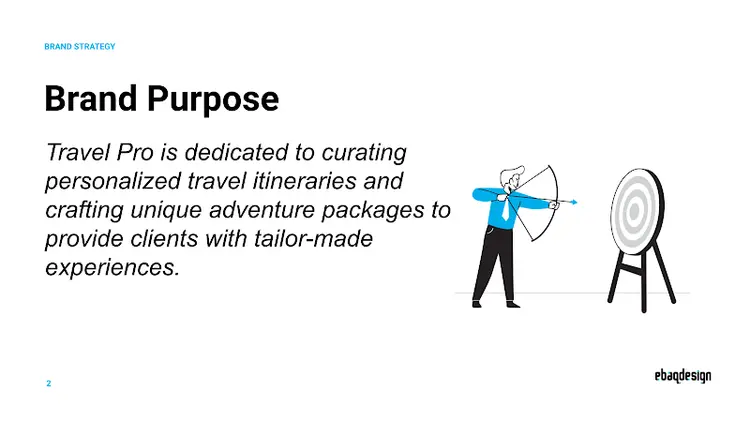
Notice how Travel Pro's purpose is not about booking hotels or selling tickets. It is about curating personalized experiences and crafting adventure packages that are tailor-made for each client. That distinction matters because it frames every client interaction as a creative, consultative process rather than a transaction.
Set Your Brand Vision
If purpose is your "why," vision is your "where." It describes the future state your travel agency is working toward. A brand vision should be ambitious enough to inspire your team but grounded enough to be believable.
For a travel agency, your vision might involve becoming the leading authority in a specific type of travel, expanding into new markets, or pioneering a new way of planning trips. The point is to give your brand a direction that guides long-term decisions.
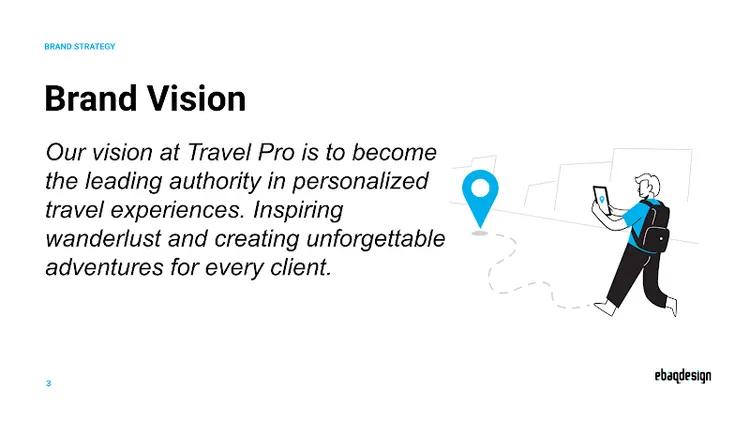
A clear vision prevents short-term thinking. If your vision is to be the leading authority in personalized travel, then cutting corners on itinerary quality to increase volume works against that goal. Every strategic decision should move you closer to the future you have defined.
Establish Core Values
Core values are the principles your agency operates by every day. They are not motivational posters. They are practical filters for making decisions when the right path is not obvious.
When a client requests a last-minute change to their itinerary, how does your team respond? When choosing between a cheaper supplier and one with better reviews, which do you pick? Your core values answer these questions before they arise.
For a travel agency, values typically cluster around a few themes: the quality of service you provide, how you treat client relationships, your stance on responsible tourism, and your commitment to going beyond expectations. Pick three to five values that genuinely reflect how your agency operates.
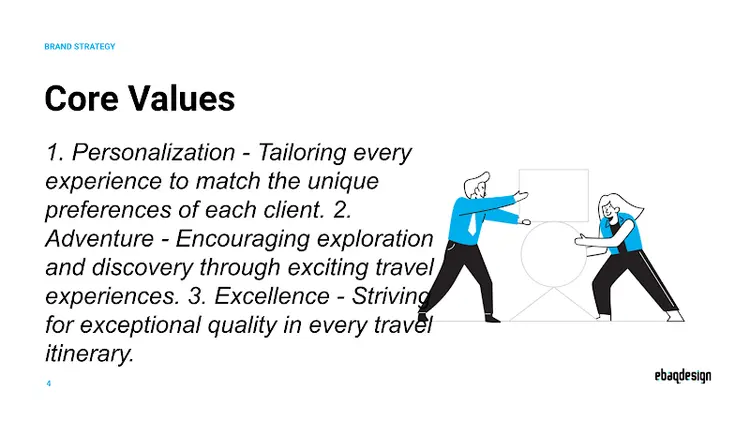
Travel Pro chose personalization, adventure, and excellence as their core values. Each one is actionable. Personalization means no two itineraries are the same. Adventure means they actively seek out unique experiences beyond the standard tourist path. Excellence means every detail is checked and double-checked before a client departs.
Identify Your Target Audience
You cannot be the right travel agency for everyone. A backpacker looking for the cheapest hostel has fundamentally different needs than a couple planning a luxury safari. Trying to serve both equally will dilute your brand and confuse your marketing.
Start by defining your primary audience. Consider both demographics and travel preferences:
- Demographics: Age range, income level, location, family status, and profession
- Travel style: Adventure vs. relaxation, luxury vs. budget, group vs. solo, domestic vs. international
- Booking behavior: How far in advance they plan, how much research they do, what platforms they currently use
- Pain points: What frustrates them about planning trips on their own or with other agencies
The psychographic details matter more than demographics for travel agencies. Two people with the same income can have completely different travel preferences. Understanding what motivates your ideal client to travel and what they value in a trip is what allows you to create marketing that resonates.
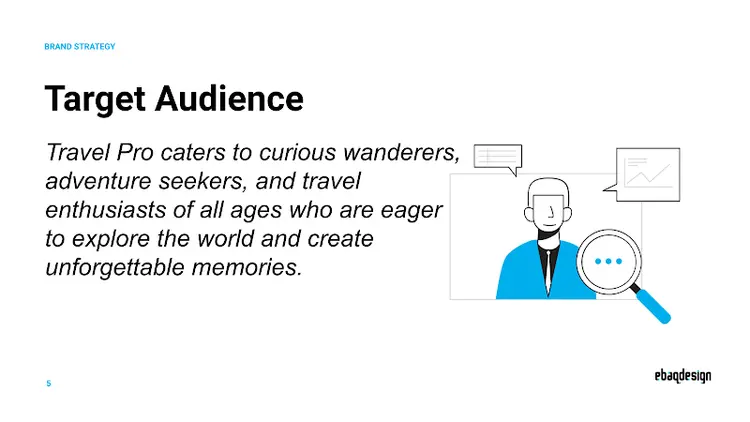
Travel Pro targets curious wanderers, adventure seekers, and travel enthusiasts of all ages who want to explore the world and create unforgettable memories. This definition is specific enough to guide content creation and marketing decisions, while still being broad enough to sustain a viable business.
Craft Your Brand Positioning
Positioning answers the question: What space does your travel agency occupy in the client's mind?
This is where you define your competitive advantage. In the travel industry, positioning typically falls along several spectrums:
- Luxury vs. budget: Are you curating high-end experiences or finding the best value?
- Adventure vs. relaxation: Are you sending people to climb mountains or unwind on beaches?
- Niche vs. general: Do you specialize in a specific destination, traveler type, or trip style?
- Tech-forward vs. high-touch: Do you leverage technology or emphasize personal relationships?
The strongest positioning combines two or more of these dimensions in a way that competitors do not. Being a luxury adventure agency is more distinctive than being just a luxury agency or just an adventure agency.
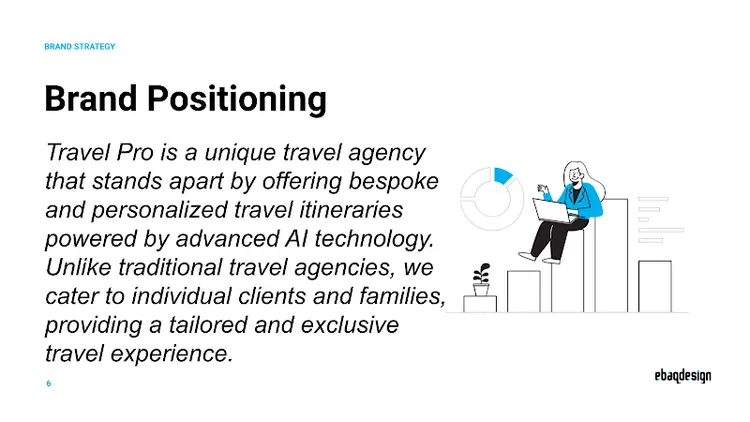
Travel Pro positions itself as a unique agency that combines bespoke, personalized itineraries with advanced technology. Unlike traditional agencies, they cater specifically to individual clients and families who want a tailored and exclusive experience. This positioning immediately separates them from both generic travel agencies and impersonal online booking platforms.
Set Marketing Goals
Your brand strategy needs measurable marketing goals that connect directly to business outcomes. For a travel agency, the most important metrics revolve around bookings, client retention, and referrals.
Common marketing goals for travel agencies include:
- Increase direct bookings by a specific percentage within a defined timeframe
- Grow repeat client rate because returning customers are significantly more profitable than new ones
- Generate referrals since personal recommendations carry enormous weight in travel decisions
- Build social proof through reviews, testimonials, and user-generated content from past travelers
- Expand social media presence with destination content that attracts your target audience
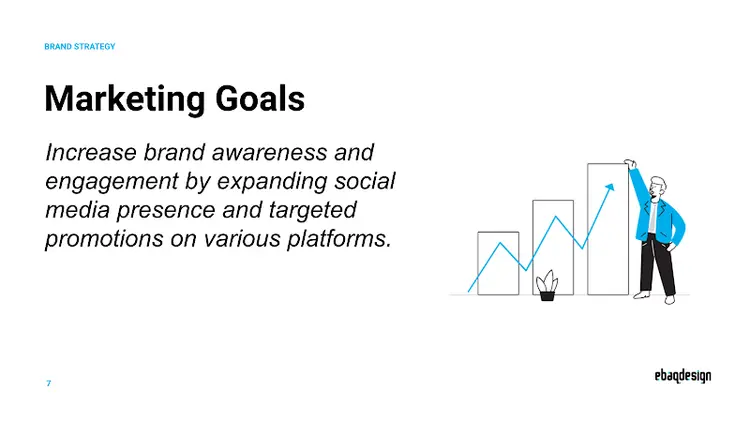
Travel Pro focuses on increasing brand awareness and engagement through expanded social media presence and targeted promotions. This is a smart starting point for a travel agency because visual platforms like Instagram and TikTok are where potential travelers go for destination inspiration. Meeting them there with branded, high-quality content builds recognition before the booking conversation even starts.
Define Brand Personality
If your travel agency were a person, what would they be like? Brand personality makes your business relatable and memorable. It shows up in every client email, social media caption, website page, and phone conversation your team has.
For travel agencies, personality is especially important because clients are trusting you with experiences that carry emotional significance. A honeymoon, a milestone birthday trip, a family vacation: these are events people remember for the rest of their lives. Your brand personality should make clients feel confident that you understand the weight of that responsibility.
Think about the traits that would make someone want to hand over their travel plans to your agency. Adventurous suggests you know the best off-the-beaten-path experiences. Knowledgeable signals deep destination expertise. Trustworthy reassures clients that the logistics will be handled flawlessly.
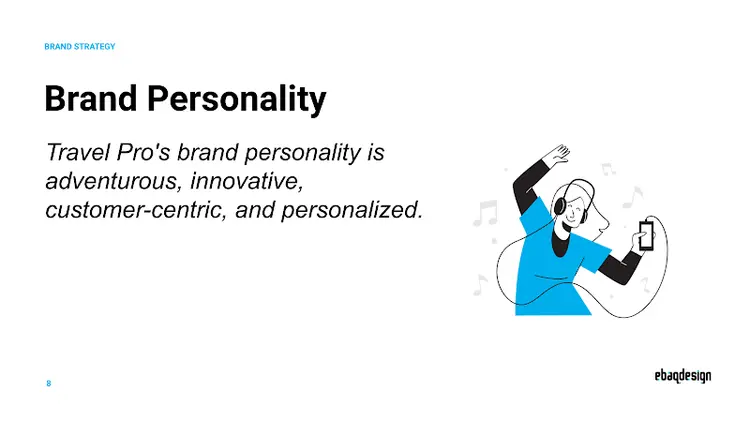
Travel Pro's personality is adventurous, innovative, customer-centric, and personalized. Each trait maps to a specific aspect of the client experience. Adventurous means the itineraries include exciting, unexpected elements. Innovative means they use technology to enhance the planning process. Customer-centric means every decision starts with what the client actually wants. Personalized means no generic packages.
Develop Tone of Voice
Tone of voice is how your brand personality comes through in communication. For a travel agency, this covers a wide range of touchpoints: website copy, social media posts, email newsletters, itinerary documents, client proposals, and even how your team answers the phone.
Travel agency tone of voice typically needs to balance two qualities: inspiration and practicality. Your marketing content should make people dream about destinations and experiences. But your booking communications, itineraries, and travel documents need to be clear, precise, and reassuring.
Define where your tone falls on these spectrums:
- Inspirational vs. informational
- Casual vs. professional
- Enthusiastic vs. measured
- Storytelling vs. factual
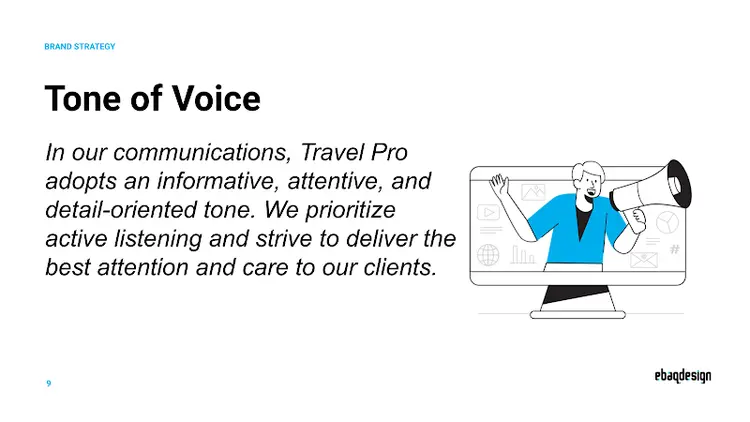
Travel Pro adopts an informative, attentive, and detail-oriented tone. They prioritize active listening and strive to deliver the best attention and care to their clients. This tone works well because it reinforces the agency's positioning as a personalized, high-touch service. Clients reading their communications should feel like someone is genuinely paying attention to their specific needs and preferences.
Create a Brand Tagline
A tagline is a short, memorable phrase that captures your brand's essence. For a travel agency, the tagline should evoke the feeling of travel while hinting at what makes your agency different.
Good travel agency taglines tend to be short (under six words), emotionally resonant, and connected to your positioning. They should work on your website header, business cards, email signatures, and social media bios.
Avoid taglines that could belong to any travel company. "Your dream vacation awaits" could be used by literally any agency. The best taglines are specific enough that they could only belong to your brand.
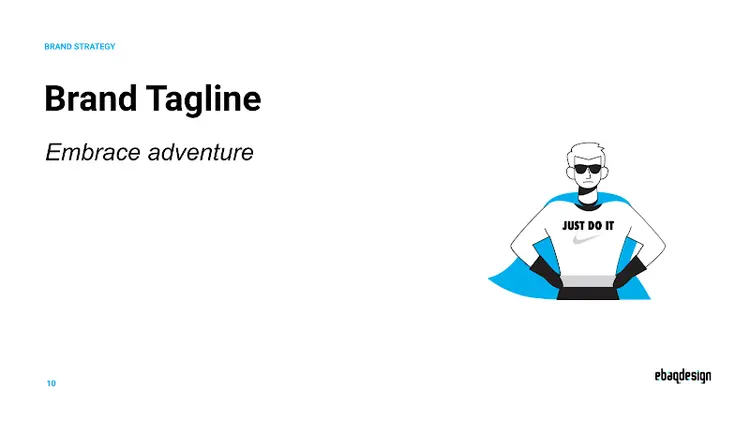
Travel Pro's tagline is "Embrace adventure." It is only two words, but it communicates the brand's core identity instantly. It is an invitation and a mindset, not just a description of services. Combined with their positioning and personality, this tagline tells potential clients exactly what kind of travel experience to expect.
Once you have all these elements defined, you have a complete brand strategy deck that serves as the foundation for every branding decision going forward. From your website design and social media content to how your team communicates with clients and partners, every touchpoint should reflect the strategy you have built.
Key Takeaways
- Differentiate from OTAs by leaning into what algorithms cannot provide: human expertise, personalized service, and genuine care for the travel experience.
- Define a specific target audience. Trying to serve every type of traveler will make your brand forgettable.
- Your positioning should combine dimensions (luxury + adventure, tech-forward + personal) to create a space that is uniquely yours.
- Balance inspiration with practicality in your tone of voice. Dream-selling gets attention, but clear communication builds trust.
- Document everything. A brand strategy only works if it is written down and shared with your entire team.
- Use AI tools like Brand Strategist AI to build a complete strategy deck in minutes, not weeks.
Build Your Travel Agency Brand Strategy
Brand Strategist AI walks you through every step and generates a professional strategy deck automatically. No branding experience needed.
Try Brand Strategist AI FreeFrequently Asked Questions
What should a travel agency brand strategy include?
A travel agency brand strategy should include your brand purpose, vision, core values, target audience definition, brand positioning, marketing goals, brand personality, tone of voice, and a tagline. These elements work together to differentiate your agency from online booking platforms and build lasting client relationships.
How much does it cost to brand a travel agency?
Traditional branding agencies charge between $5,000 and $50,000+ for travel agency brand strategy. AI-powered tools like Brand Strategist AI can help you develop a professional brand strategy for a fraction of that cost, making it accessible for independent travel agencies and new tour operators.
How do I differentiate my travel agency from online booking platforms?
Differentiation starts with your brand positioning. Focus on what OTAs cannot offer: personalized itineraries, expert destination knowledge, human support during travel disruptions, and curated experiences. A strong brand strategy helps you communicate these advantages consistently across all touchpoints so potential clients understand your value before they ever reach out.
Can I use AI to create a brand strategy for my travel agency?
Yes. AI brand strategy tools can guide you through defining your purpose, vision, target audience, positioning, and personality in minutes. The output gives you a professional strategy deck you can use to guide all branding decisions from website design to social media campaigns and client communications.