
Why Your Wellness Brand Needs a Strategy
The wellness industry is projected to be worth over $7 trillion globally. That is an enormous market, but it also means fierce competition. New wellness brands launch every day, from supplement companies and yoga studios to mental health apps and holistic health centers. Without a clear brand strategy, you are just another option in an oversaturated space.
Trust is the foundation of every wellness brand. People are putting their health in your hands. They need to believe that your products or services are safe, effective, and backed by real expertise. A strong brand strategy builds that trust systematically rather than leaving it to chance.
Credibility is the other challenge. The wellness space has a reputation problem. Too many brands make vague claims, use pseudoscience, or overpromise results. A well-defined brand strategy helps you stand apart by being specific about what you offer, who you serve, and why your approach works.
Throughout this article, we will reference a brand strategy deck created for HealthHub, a holistic health and wellness brand. Each section includes the actual strategy slide so you can see what a finished wellness brand strategy looks like in practice.
Define Your Brand Purpose
Your brand purpose answers one fundamental question: Why does your wellness brand exist beyond generating revenue?
In the wellness industry, purpose carries extra weight. People are not buying a commodity. They are investing in their health, their peace of mind, or their physical transformation. Your purpose needs to reflect the real impact you want to have on people's lives.
Think about the gap you saw in the market when you started. Maybe you noticed that quality wellness services were only available to wealthy demographics. Maybe you saw that most fitness brands ignored mental health entirely. Maybe you wanted to bring evidence-based practices to an industry full of unsupported claims. That gap is your purpose.
A strong wellness brand purpose focuses on the outcome for the customer, not the features of your service. It is about health impact, accessibility, and the holistic transformation you enable.
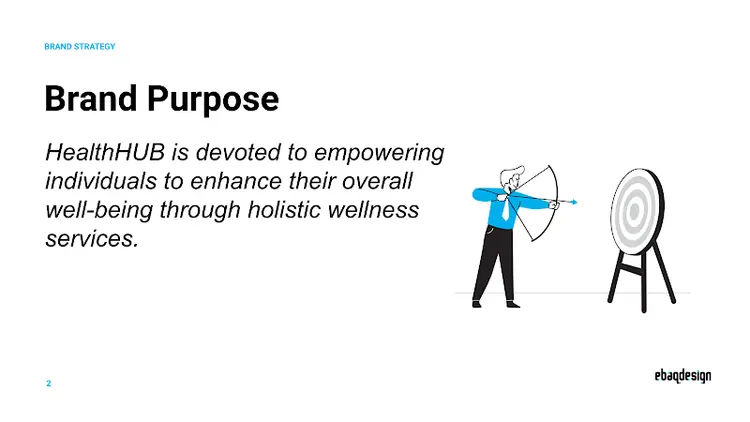
Notice how HealthHub's purpose is not about selling yoga classes or supplements. It is about empowering people to enhance their overall well-being. That framing shapes everything from service design to customer communication. Every offering should connect back to this core purpose.
Set Your Brand Vision
If purpose is your "why," vision is your "where." Your brand vision describes the future state you are working toward. For a wellness brand, this often connects to a broader change you want to see in how people approach their health.
A good wellness brand vision is ambitious but grounded. It should stretch your thinking about what is possible while still feeling achievable over a five to ten year timeline. Think about where you want your brand to be and what role it plays in the wellness landscape.
Your vision might focus on becoming the leading destination for a specific type of wellness, redefining how people think about health, or making certain wellness practices accessible to underserved communities. The key is specificity. A vision that could apply to any wellness brand is not useful.
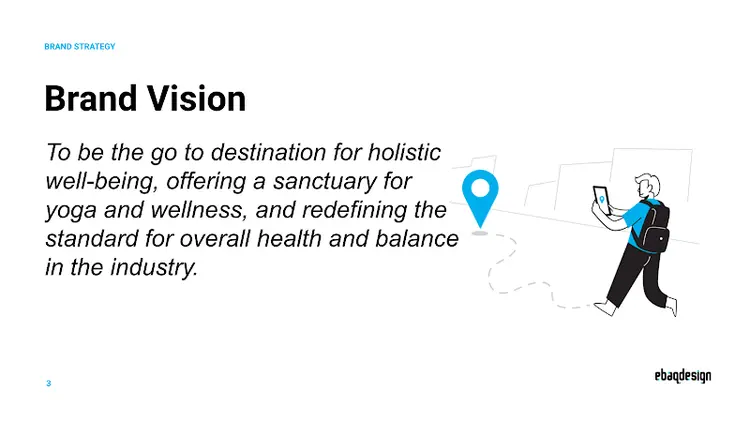
HealthHub's vision positions the brand as a sanctuary for holistic well-being. That word, sanctuary, is doing important work. It signals that HealthHub is not just a service provider. It is a destination, a place people go to feel restored. That distinction influences everything from physical space design to digital experience.
Establish Core Values
Core values are the principles that guide your decisions when the answer is not obvious. In the wellness industry, values matter more than in most sectors because your customers are trusting you with their health.
The most effective wellness brand values fall into a few categories. Evidence-based practice signals that your recommendations are grounded in science, not trends. Holistic approach tells customers you consider the whole person, not just symptoms. Accessibility communicates that wellness should not be a luxury reserved for the few. Empowerment shows that your goal is to give people the tools to take control of their own health.
Choose three to five values that genuinely reflect how you operate. These are not marketing words for your website. They are decision-making filters your team uses every day. When a new partnership opportunity comes up, your values should tell you whether to pursue it. When you are deciding on pricing, your values should guide the conversation.
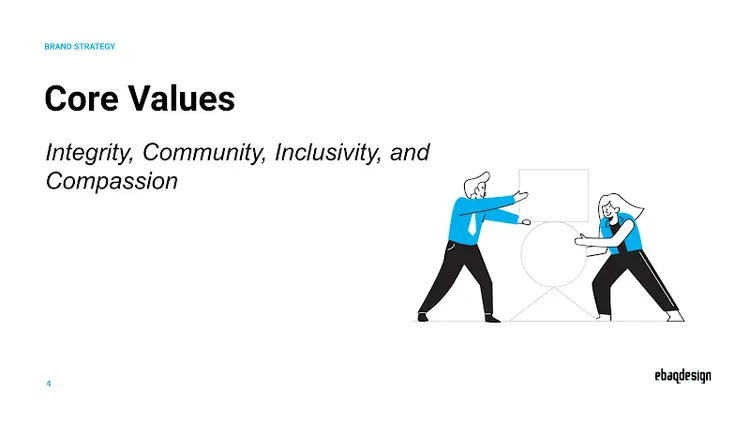
HealthHub chose integrity, community, inclusivity, and compassion. These are not generic corporate values. They are specific to the wellness space and create clear guardrails. Integrity means HealthHub will not make unsupported health claims. Inclusivity means their services are designed for people of all fitness levels and backgrounds.
Identify Your Target Audience
You cannot build a wellness brand that serves everyone effectively. A yoga studio targeting stressed executives needs a completely different brand than one targeting postpartum mothers. The services might overlap, but the messaging, pricing, atmosphere, and marketing channels are entirely different.
Start with demographics: age range, income level, location, and life stage. But do not stop there. Psychographics are where wellness brands win or lose. What does your ideal customer believe about health? What have they already tried? What frustrations do they have with existing options? What motivates them to invest in wellness?
Health-conscious consumers are not a monolith. Some are prevention-focused and want to stay ahead of health issues. Some are recovery-focused and dealing with specific conditions. Some are performance-focused and want to optimize their bodies. Each group responds to different messaging and values different outcomes.
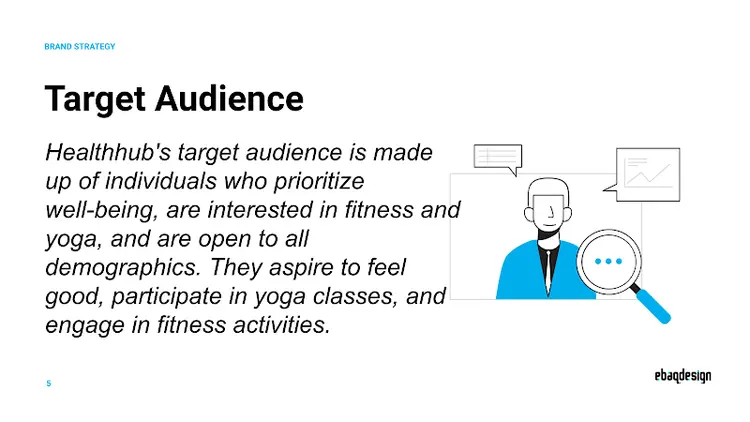
HealthHub targets individuals who prioritize well-being and are interested in fitness and yoga. The description goes further by noting they are open to all demographics but united by a shared aspiration to feel good and engage in wellness activities. This psychographic focus is more useful than demographic boxes alone.
Craft Your Brand Positioning
Brand positioning defines the specific space your wellness brand occupies in the customer's mind. This is where you make critical strategic choices about how you want to be perceived relative to competitors.
In the wellness industry, there are several positioning spectrums to consider:
- Clinical vs. holistic: Are you rooted in medical science or in traditional and alternative practices?
- Premium vs. accessible: Are you the high-end option or the brand that makes wellness available to more people?
- Niche vs. broad: Do you specialize in one area (sleep, stress, gut health) or offer comprehensive wellness?
- Individual vs. community: Is your brand about personal transformation or shared wellness experiences?
There is no right answer. The right position depends on your market, your strengths, and the gaps left by your competitors. Research what exists in your area. If every wellness brand in your city positions as premium and exclusive, there may be an opportunity to position as accessible and community-driven.
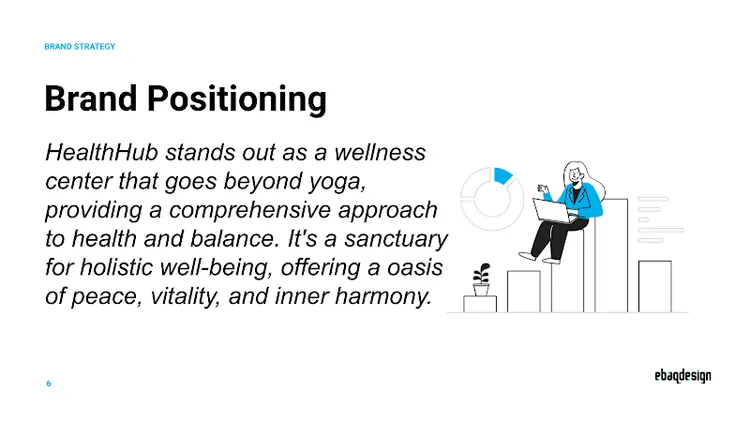
HealthHub positions itself as a wellness center that goes beyond yoga to provide a comprehensive approach to health and balance. This positioning carves out space against competitors who focus on a single discipline. It also uses the language of sanctuary, peace, and inner harmony, which appeals to customers seeking a refuge from stress rather than just a workout.
Set Marketing Goals
Your brand strategy needs marketing goals that connect directly to business outcomes. For wellness brands, the most impactful goals typically fall into four categories.
Education is the first priority. Wellness customers do extensive research before committing. Content that educates, whether about your methodology, the science behind your approach, or general wellness topics, builds the trust that converts browsers into customers. Blog posts, workshops, and social media content that teaches rather than sells is extremely effective in this space.
Community building is the second goal. Wellness is personal, but people want to be part of something bigger. Brands that create community through group programs, online forums, events, or ambassador programs generate organic word-of-mouth and higher retention rates.
Social proof and testimonials are the third goal. In wellness, results speak louder than marketing copy. Collecting and sharing client transformations, reviews, and case studies is essential for overcoming the skepticism that many consumers bring to wellness brands.
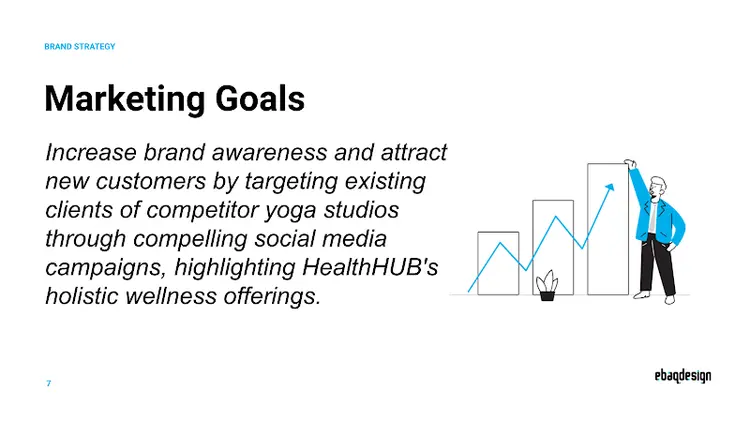
HealthHub's marketing goals focus on increasing brand awareness and attracting new customers by targeting existing clients of competitor yoga studios through compelling social media campaigns. This is smart because it identifies a specific, reachable audience that already values wellness rather than trying to convert people who are not yet interested.
Define Brand Personality
If your wellness brand were a person, how would they show up in a room? Brand personality makes your business relatable and memorable. It determines how people feel when they interact with your brand at every touchpoint.
Wellness brands face a unique personality challenge. You need to be authoritative enough that people trust your health-related guidance, but warm enough that they do not feel intimidated or judged. You need to be motivating without being pushy. You need to be knowledgeable without being condescending.
The most successful wellness brand personalities blend competence with compassion. They feel like a knowledgeable friend who genuinely cares about your well-being, not a clinical expert lecturing you about what you should do. Think about the difference between a doctor reading from a chart and a trusted advisor who asks how you are really feeling.
HealthHub's brand personality is nurturing, serene, and professional. Those three words work together well. Nurturing conveys care and warmth. Serene reflects the calm, restorative experience the brand provides. Professional ensures customers feel confident in the expertise behind the services. Your team should be able to read these three words and immediately understand how to interact with clients.
Develop Tone of Voice
Tone of voice translates your brand personality into actual words. For wellness brands, tone is particularly important because your content often covers health topics where the wrong tone can erode trust or alienate your audience.
There are a few specific areas where wellness brand tone requires careful attention:
- Health claims: Your tone should be confident but never absolute. Use language like "may support" or "research suggests" rather than guarantees. This protects your credibility and keeps you on the right side of regulations.
- Educational content: Strike a balance between being informative and being approachable. Avoid jargon when simpler language works. Explain concepts as if you are talking to a smart friend, not writing a medical journal.
- Social media: This is where you can be warmer and more casual. Share behind-the-scenes content, celebrate client wins, and show the human side of your brand. But stay consistent with your overall personality.
- Client communication: Whether it is emails, intake forms, or follow-ups, your tone should make people feel supported and respected, not processed through a system.
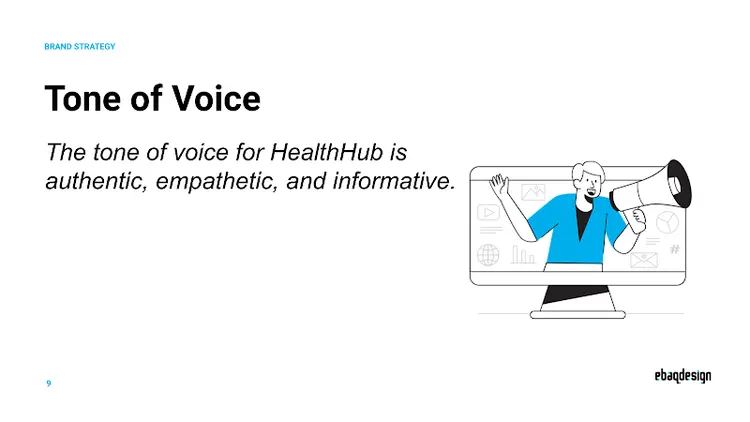
HealthHub's tone of voice is authentic, empathetic, and informative. Authentic means they speak honestly and avoid wellness industry buzzwords that have lost their meaning. Empathetic means they acknowledge that health journeys are personal and sometimes difficult. Informative means they always aim to educate and add value, not just promote services.
Create a Brand Tagline
A tagline distills your entire brand strategy into a handful of words. For a wellness brand, the tagline should evoke the transformation or experience your customers can expect. It is not a description of your services. It is a promise or aspiration.
Effective wellness taglines tend to be short, emotionally resonant, and connected to the outcome your customers want. They avoid clinical language and lean into how wellness makes people feel. Think about the end state your brand delivers. Is it energy? Balance? Peace? Strength? That feeling is the seed of your tagline.
Test your tagline against a simple question: could a competitor use this same line? If yes, it is not specific enough. Your tagline should feel like it could only belong to your brand.
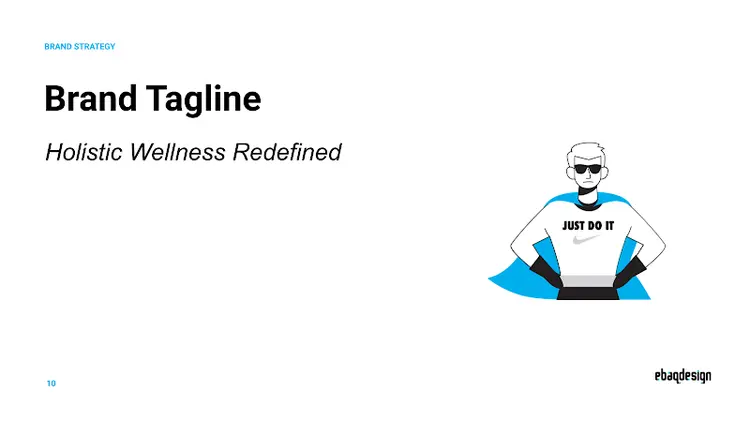
HealthHub's tagline is "Holistic Wellness Redefined." It communicates two things: the brand takes a holistic (whole-person) approach, and it is doing something different from what already exists. The word "redefined" signals innovation and positions HealthHub as a leader rather than a follower in the wellness space.
With all ten elements defined, you have a complete brand strategy deck that serves as the foundation for every decision going forward. From visual identity and website design to content marketing and client onboarding, every touchpoint should reflect the strategy you have built.
Key Takeaways
- Trust is everything in wellness. Your brand strategy is the foundation for building credibility in an industry full of skepticism.
- Purpose drives the brand. Anchor your wellness brand in a genuine commitment to health impact, not just profit.
- Get specific with your audience. Psychographics matter more than demographics when targeting health-conscious consumers.
- Positioning requires trade-offs. Decide where you stand on clinical vs. holistic, premium vs. accessible, and niche vs. broad.
- Tone of voice is critical for health content. Be confident but careful with health claims, and always prioritize education over promotion.
- Use AI tools like Brand Strategist AI to build a complete wellness brand strategy deck in minutes, not weeks.
Build Your Wellness Brand Strategy
Brand Strategist AI walks you through every step and generates a professional strategy deck automatically. No branding experience needed.
Try Brand Strategist AI FreeFrequently Asked Questions
What should a wellness brand strategy include?
A wellness brand strategy should include your brand purpose, vision, core values, target audience definition, brand positioning, marketing goals, brand personality, tone of voice, and a tagline. These elements work together to create a consistent foundation for all branding and marketing decisions across your wellness business.
How much does it cost to brand a wellness company?
Traditional branding agencies charge between $5,000 and $50,000+ for wellness brand strategy work. AI-powered tools like Brand Strategist AI can help you develop a professional brand strategy for a fraction of that cost, making strategic branding accessible for independent wellness practitioners and startups.
How do I differentiate my wellness brand from competitors?
Differentiation starts with your brand positioning. Focus on what makes your wellness brand unique: your approach (clinical vs. holistic), your specialty (fitness, mental health, nutrition), your delivery method, or your target demographic. A strong brand strategy helps you identify and communicate these differentiators consistently across all touchpoints.
Can I use AI to create a brand strategy for my wellness brand?
Yes. AI brand strategy tools can guide you through defining your purpose, vision, target audience, positioning, and personality in minutes. The output gives you a professional strategy deck you can use to guide all branding decisions from visual identity to content marketing and client communications.